A headquarters in Utrecht Central: the country's most underrated HQ location.
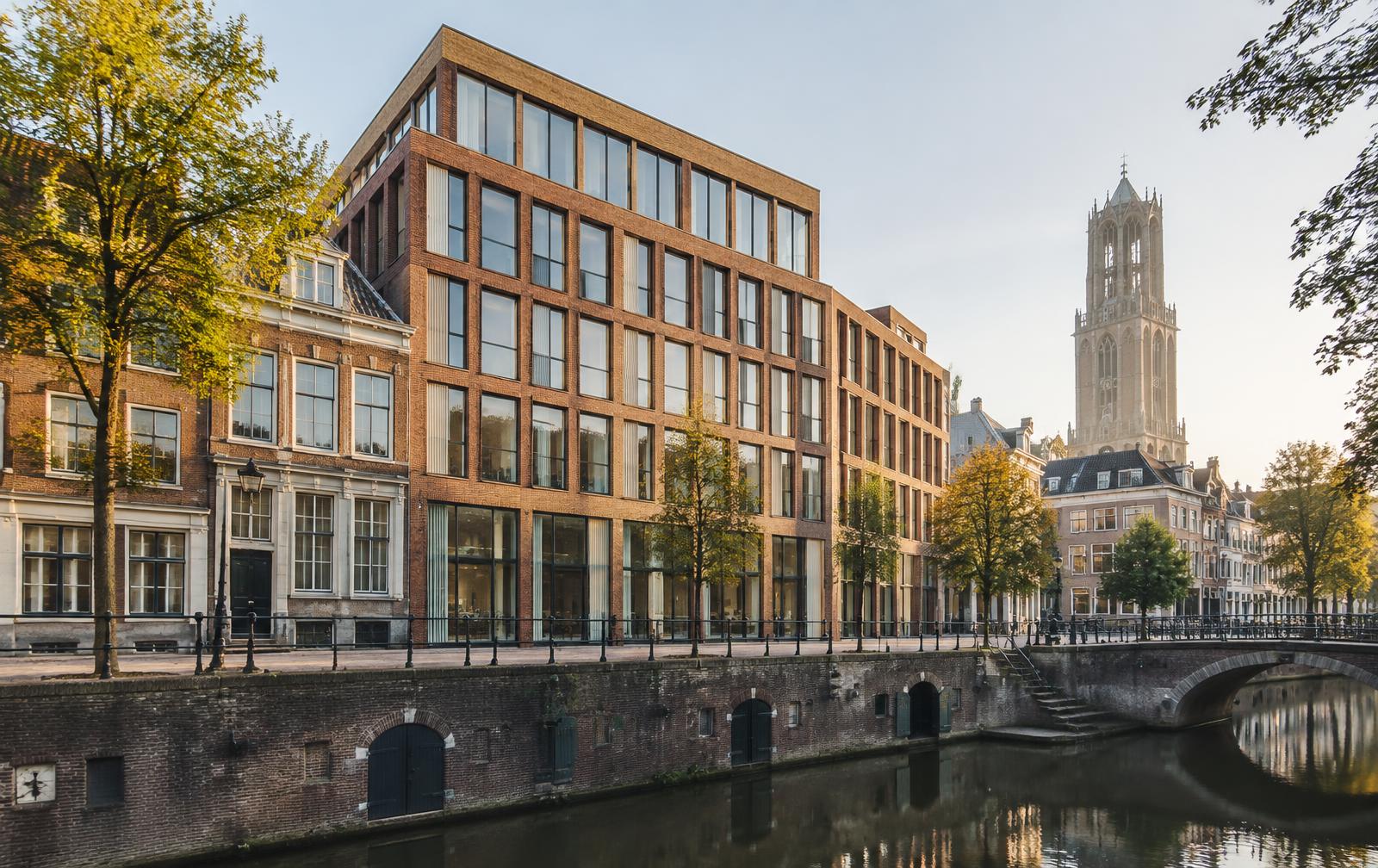
Utrecht Central is the busiest rail hub in the Netherlands and the geographic centre of the country. For organisations whose talent pool spans the full Randstad and whose clients sit across the country, it offers a structural advantage that Amsterdam cannot match. Yet it remains the default second choice. This article explains why, and when Utrecht is the better answer.
The geographic advantage, quantified
From Utrecht Central, more than 70% of the working population of the Netherlands sits within 45 minutes by public transport. No other location in the country comes close. For organisations whose workforce sits across the full Randstad plus the south and east, that translates directly into lower commute friction, lower attrition risk, and a broader recruitment funnel.
The sectors for which Utrecht is structurally optimal
Four categories of organisation are better served by Utrecht than by Amsterdam: national professional services with mixed Randstad/regional clients, healthcare and life sciences with academic ties (UMC ecosystem), pension funds and insurance with a national operational footprint, and ICT/SaaS firms with distributed engineering teams.
For these categories the Amsterdam premium buys very little and the Utrecht advantage is structural rather than cosmetic, for a comparable analysis on adjacent cities, see a headquarters in Rotterdam.
Hoog Catharijne, Papendorp, Leidsche Rijn, the three sub-markets
The Utrecht Central area (Stadskantoor, WTC Utrecht, Central Park) offers the strongest connectivity profile and the highest corporate density. Papendorp is the suburban A2-corridor option with better parking and lower rents, suited to organisations whose talent commutes by car. Leidsche Rijn is the development zone with long-horizon appeal but weaker existing infrastructure.
The international perception gap
Internationally, Utrecht is less recognised than Amsterdam. For organisations whose international clients are critical to revenue, that perception gap is real and needs to be managed. For organisations whose international dimension is operational rather than client-facing, it is essentially irrelevant.
When Amsterdam still wins
If your business case rests on international finance counterparty proximity, on a Schiphol fly-in client pattern, or on competing for talent against Amsterdam-based tech and consulting firms, Utrecht does not match. For most other corporate headquarters in the Netherlands, the honest comparison favours Utrecht more often than boards assume, for the financial-sector counter-case see the Zuidas.
Frequently asked questions
What does prime Utrecht Central rent?
+
€280–€360 per m² per year for the top segment around Hoog Catharijne and the station. Papendorp: €200–€260. Substantially below comparable Zuidas levels.
How does parking work in Utrecht Central?
+
Constrained and expensive, comparable to Amsterdam-Zuid. Organisations relying on car-commuting senior staff should look at Papendorp or accept structural mobility-budget cost.
Is the talent market deep enough for senior tech roles?
+
For most disciplines yes: Utrecht draws from the same Randstad pool as Amsterdam. For elite AI/ML and certain niches, Amsterdam remains denser.
How does Utrecht compare to The Hague for national professional services?
+
Utrecht almost always wins on talent breadth and commute reach. The Hague wins only where direct proximity to government or international legal organisations is core to the business model.
A headquarters in Rotterdam: three locations, three strategies
Rotterdam offers three meaningfully different headquarters sub-markets. Which fits which organisation, and the risks specific to each.
A headquarters in The Hague CBD: close to government and the international rule of law
The Hague is the least predictable of the Dutch HQ locations. For organisations whose strategic logic ties to government or to international legal organisations it's an underestimated choice, for most others it's a mismatch.
Multi-year housing strategy: the document the board should defend by
Most organisations confuse a lease overview with a housing strategy. A real strategy makes a decade of decisions defensible, and replaces ad-hoc bets with a coherent posture.